

Contents 28
Off the coast of Tanzania, the Zanzibar archipelago comprises Unguja, the main island, and Pemba. People come for Stone Town, a UNESCO-listed Swahili trading town, for the beaches of the northern tip where you can swim at any hour, for the Mnemba reef and for Jozani forest and its red colobus monkeys. This guide gathers 10 must-sees, five verified excursions and the practical essentials: e-visa, mandatory insurance, malaria, seasons and budget.
Overview
An Indian Ocean archipelago off Tanzania, Zanzibar blends white-sand beaches, coral reefs and the historic UNESCO-listed town of Stone Town — a scent of spices and Swahili history.
Off the Tanzanian coast, the Zanzibar archipelago is the stuff of dreams: turquoise lagoons, palm-fringed white-sand beaches and some of the finest coral reefs in the Indian Ocean. But Zanzibar is also a thousand-year history of the spice and slave trades, embodied by Stone Town, its UNESCO-listed historic heart.
You come to laze on the beaches of Nungwi and Kendwa, dive around the Mnemba atoll, watch the endemic red colobus at Jozani and wander the maze of Stone Town. A week lets you combine beach, culture and nature. Be sure to check the visa and health precautions before you go (see formalities).
10 places to take with you
In the guide's order, ready for Google Maps or your GPS.
Book the activities from this guide
Our picks for Zanzibar, well rated and free to cancel.
-
Book this activity
Guided walk through Stone Town
About €22 per person (GetYourGuide price 2026)
-
Book this activity
Prison Island and Nakupenda sandbank
About €36 per person (GetYourGuide price 2026)
-
Book this activity
Mnemba snorkeling and dolphins from Kendwa
About €48 per person (GetYourGuide price 2026)
Affiliate links: Travel Advice earns a commission if you book, at no extra cost to you. Learn more

Stone Town
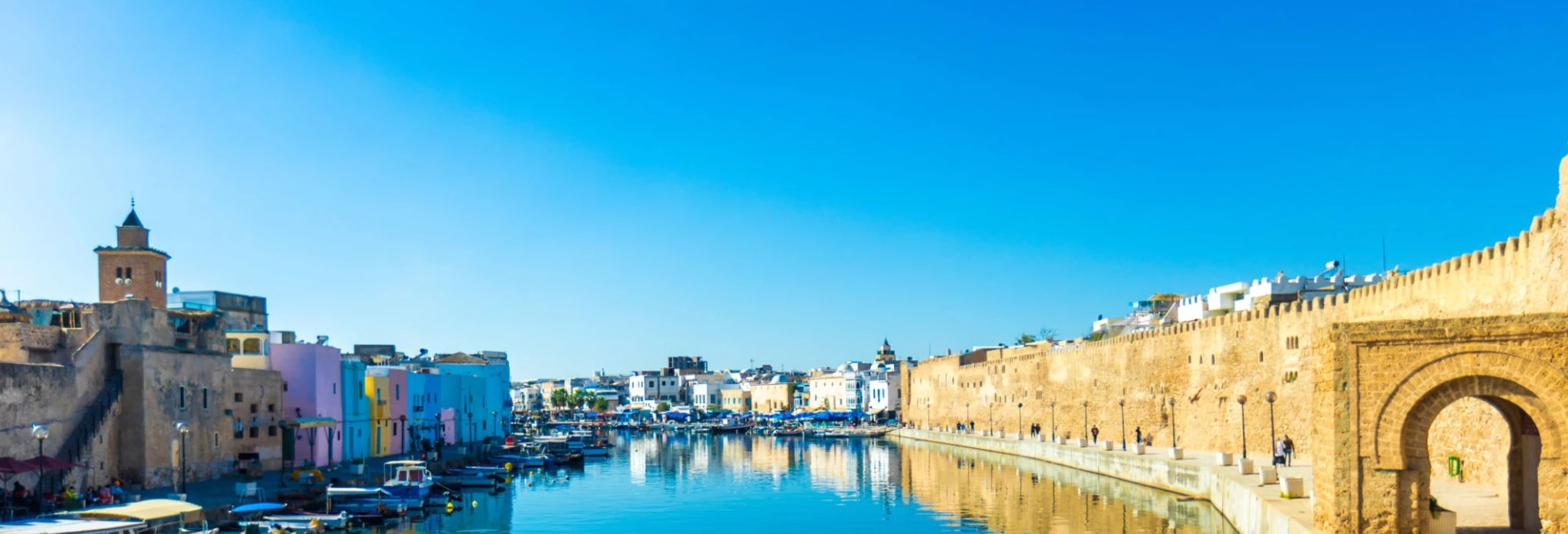
The historic heart of Zanzibar City, Stone Town has been a UNESCO World Heritage Site since 2000: a maze of lanes blending Swahili, Arab, Indian and European influences. You'll admire the carved wooden doors, the Old Fort (Ngome Kongwe), the House of Wonders, the former slave market and its moving memorial. At dusk, the Forodhani Gardens come alive with street-food stalls. Wandering aimlessly is the best way to grasp the city's soul.

Nungwi and Kendwa beaches
At the northern tip of Unguja, Nungwi and Kendwa are Zanzibar's two busiest beaches, and the only large beaches where the tide doesn't drain the lagoon: you can swim at any hour, in turquoise water edged with white sand. Nungwi is still a fishing village, with its traditional dhow-building yard and morning fish market; Kendwa, a little further south, is quieter and faces the sunset.
The two beaches connect on foot at low tide. This is the departure point for Mnemba trips, intro dives and sunset dhow cruises.

Mnemba Atoll
Off the north-east coast, a few kilometres from Matemwe, Mnemba is a private coral islet ringed by a reef designated a marine protected area. The island itself is reserved for guests of its only lodge, but the reef is reached by boat from Nungwi, Kendwa or Matemwe: shallow coral gardens, clownfish, green turtles and, on the way, pods of dolphins often seen in the morning.
It's Zanzibar's best snorkeling site and a dive site for all levels. Boats pay a conservation fee on entering the protected zone.

Jozani Forest
About 35 km south-east of Stone Town, the Jozani-Chwaka Bay National Park is the island's last large indigenous forest. There you can watch the Zanzibar red colobus (Piliocolobus kirkii), a monkey endemic to Unguja and classified endangered, plus a boardwalk through the mangrove. The visit, guided and easy, is perfect for families.

Prison Island
About twenty minutes by boat from Stone Town, Changuu, known as 'Prison Island', never actually served as a prison but as a quarantine station. People come mainly for its Aldabra giant tortoises, the first of which were a gift in 1919 from the British governor of the Seychelles; some are over a century old. The island also has a small beach and snorkeling on the nearby reef.

Forodhani Gardens
On the Stone Town seafront, between the Old Fort and the House of Wonders, Forodhani Gardens are the evening promenade of Zanzibaris. At sunset, dozens of stalls light up: fish and octopus skewers, 'Zanzibar pizza' (a stuffed pancake), sugar-cane juice pressed with ginger and urojo, the local spicy soup.
Local kids dive off the quay, dhows return to port and the park stays lively until late. It's the place to end a day in Stone Town.

The Kizimbani spice farms
About fifteen kilometres north-east of Stone Town, the farms of Kizimbani and the neighbouring villages are the setting for the 'spice tour', the visit that earned Zanzibar its nickname of Spice Island. Cloves, introduced by the sultans of Oman in the 19th century, made the archipelago's fortune; cinnamon, nutmeg, pepper, cardamom, vanilla, ginger and turmeric are also grown here.
A guide has you smell, rub and taste barks, leaves and fruit, often with a tropical-fruit tasting and a coconut-palm climbing demonstration. Allow half a day, combined with Stone Town or the road to Jozani.

Kizimkazi village
At the south-western tip of Unguja, Kizimkazi is a two-part fishing village, Dimbani and Mkunguni, known for its dolphin-watching trips: bottlenose and spinner dolphins frequent Menai Bay, a marine conservation area. The Dimbani mosque, with Kufic inscriptions dated 1107, is considered one of the oldest Islamic buildings in East Africa.
Trips leave at dawn in small boats; responsible operators keep their distance and don't drop swimmers in the middle of a pod.

The Rock, at Michamvi Pingwe
On the south-east coast, facing Michamvi Pingwe beach, a restaurant sits on a rock planted in the lagoon: at low tide you walk to it, at high tide a small boat shuttles across. The Rock has become Zanzibar's most shared image, and its terrace of a few tables serves fish and seafood with the sea all around.
People come as much for the photo as for lunch. Prices are well above the rest of the island, but the place can also be admired for free from the beach.

Pemba Island
About fifty kilometres north of Unguja, Pemba is the archipelago's second island, nicknamed 'the green island' for its hills covered in clove trees. Far less visited than Zanzibar, it mainly draws divers: its drop-offs, especially around Misali Island and the Pemba Channel, are among the richest in East Africa.
It also has Ngezi forest, a reserve in the north of the island, the Swahili ruins of Ras Mkumbuu and a handful of secluded lodges. Access is by a domestic flight of about thirty minutes from Zanzibar or by ferry.
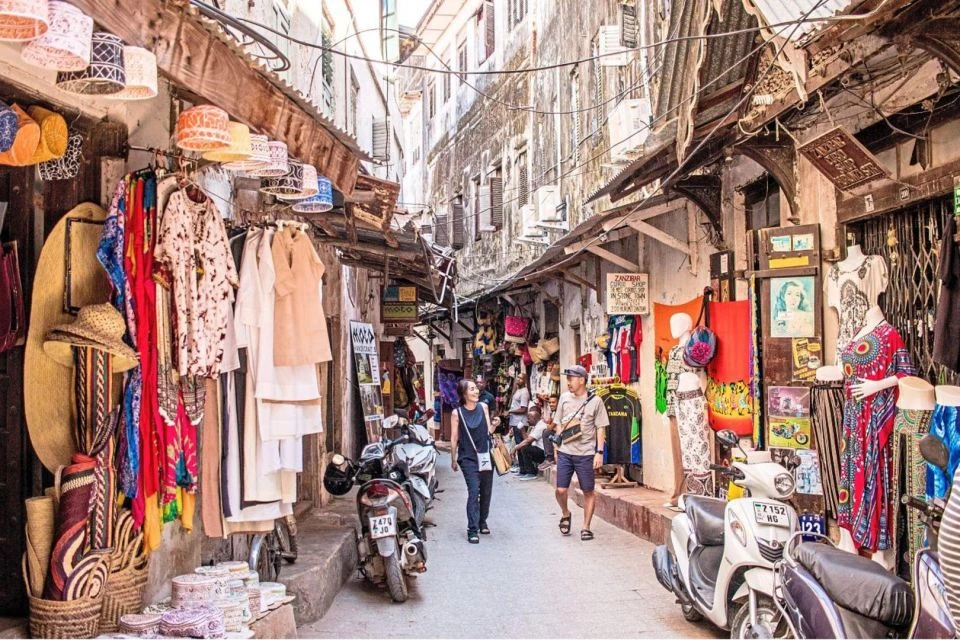
Guided walk through Stone Town
A Zanzibari guide leads you through the lanes: Indian and Arab carved doors, the Old Fort, the former slave market and its Anglican cathedral, Darajani market, Freddie Mercury's birthplace. The highlight: the slave memorial and the underground cells, which give meaning to the rest of the walk.
Do it on day one to get your bearings. Allow about €22 per person on GetYourGuide, with free cancellation; site entries (slave market) aren't always included, check the listing. Modest dress.
- 2 to 3 hrs
- About €22 per person (GetYourGuide price 2026)
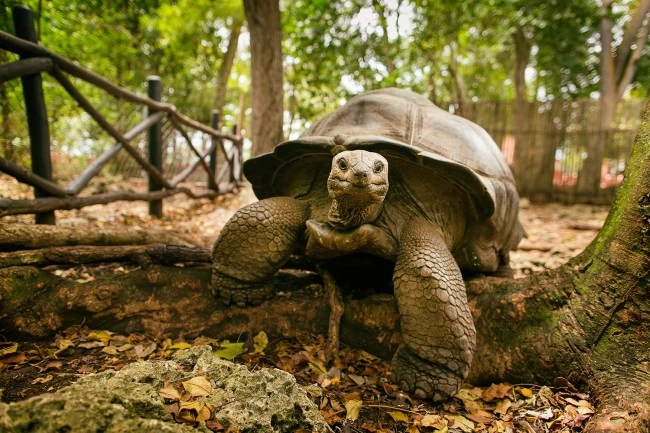
Prison Island and Nakupenda sandbank
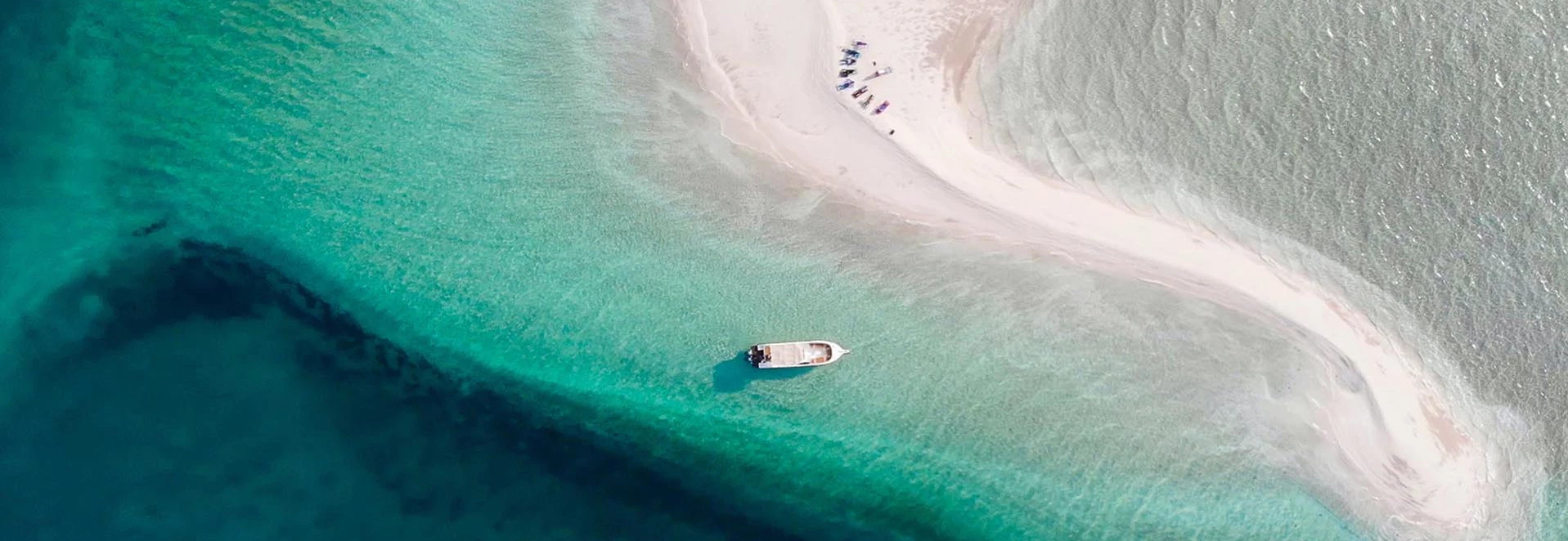
Boat departure from the Stone Town seafront to Changuu, known as Prison Island: a former quarantine station and sanctuary for Aldabra giant tortoises, some over a century old. The boat then continues to Nakupenda, a white sandbank that only emerges at low tide, for a fish barbecue and a swim in transparent water. The highlight: the sandbank alone in the middle of the blue.
Allow about €36 per person on GetYourGuide, with free cancellation; check on the listing whether the island entry fee is included. Sunscreen, hat, mask and snorkel.
- Half day (about 5 hrs)
- About €36 per person (GetYourGuide price 2026)
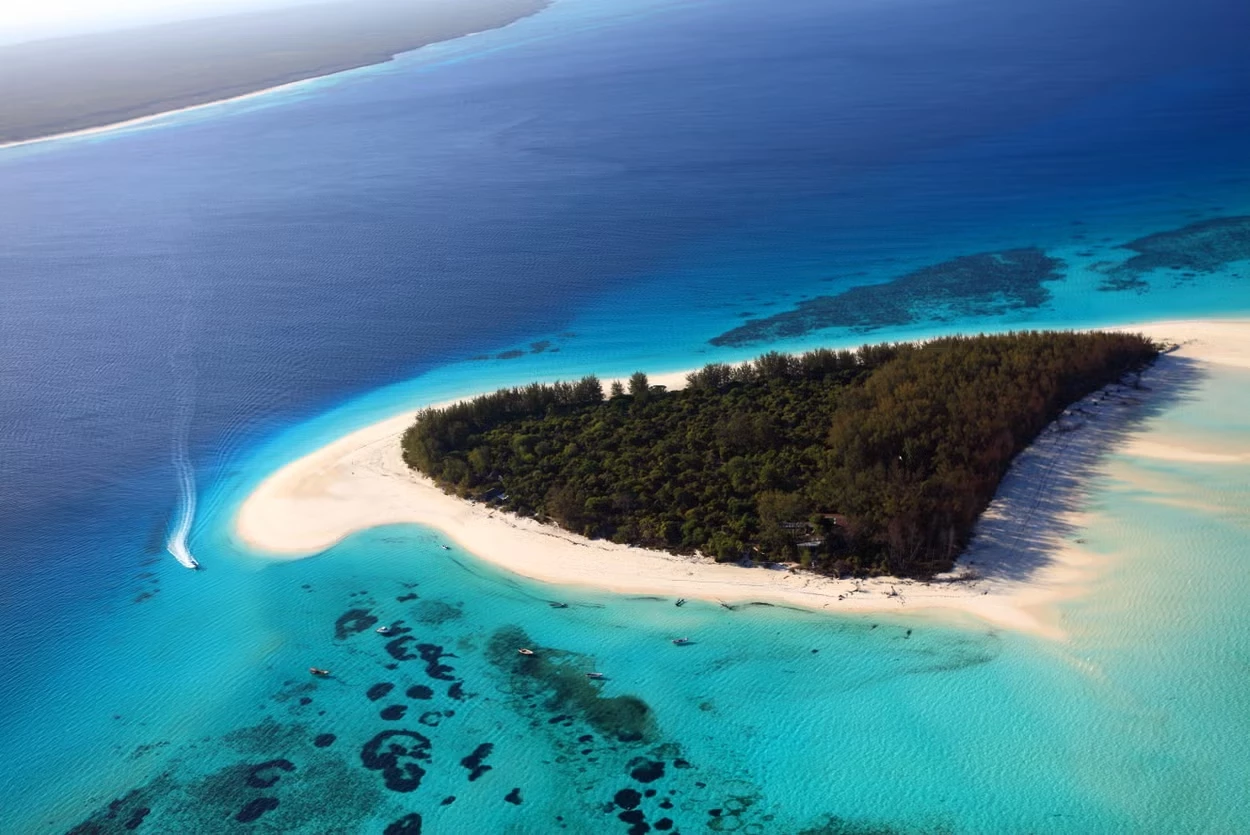
Mnemba snorkeling and dolphins from Kendwa
Boat departure from Kendwa or Nungwi along the north coast to the Mnemba reef: looking for dolphins on the way, then one or two snorkeling sessions over the coral gardens, with mask and snorkel provided. The highlight: green turtles and shoals of fish in water only a few metres deep.
For those staying in the north of the island. Allow about €48 per person on GetYourGuide, with free cancellation; the marine-area conservation fee is sometimes charged on top. Take the first departure of the morning, the sea is calmer.
- Half day (about 4 hrs)
- About €48 per person (GetYourGuide price 2026)
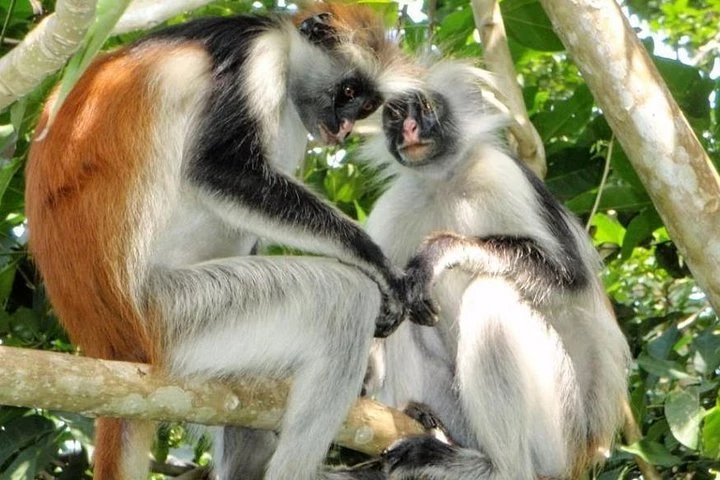
Jozani forest and sea-turtle sanctuary
Hotel pick-up, then Jozani-Chwaka Bay National Park with a park guide: Zanzibar red colobus a few metres away, a forest trail and the mangrove boardwalk. The day continues to a natural pool on the north coast where a sanctuary rehabilitates injured green turtles before release. The highlight: a colobus family crossing above the track.
Allow about €67 per person on GetYourGuide, with free cancellation; check on the listing whether the park and sanctuary entry fees are included. Closed shoes, repellent.
- Half day to full day
- About €67 per person (GetYourGuide price 2026)
Safari Blue by dhow in Menai Bay
From the village of Fumba, in the south-west, a day on a sailing dhow in Menai Bay, a marine conservation area: snorkeling on the reef, a stop on a sandbank, a swim in the Kwale blue lagoon, a grilled lobster and fish lunch on the beach, then a fruit tasting under a baobab. The highlight: the return under sail, with dolphins sometimes turning up.
Zanzibar's classic big day at sea, suitable for families. Allow about €79 per person on GetYourGuide, with free cancellation; hotel transfer depends on the option, check the listing. Sunscreen and hat essential.
- Full day (about 8 hrs)
- About €79 per person (GetYourGuide price 2026)
Getting there
Via Abeid Amani Karume International Airport (ZNZ), near Stone Town, or by ferry from Dar es Salaam (~2h). Direct international flights or via Dar es Salaam/Nairobi/Doha.
The archipelago is reached via Abeid Amani Karume International Airport (ZNZ), about 5 km south of Stone Town, served by direct flights from Europe and the Gulf, or with a connection via Dar es Salaam, Nairobi, Addis Ababa or Doha.
A cheaper alternative: fly to Dar es Salaam on the mainland, then take the ferry to Stone Town (about 2 hours). On the ground, taxis and minibuses (dala-dala) handle transfers; to explore freely, a car with driver is more comfortable than self-drive.
Getting around
Taxi or a driver for the day for excursions, dala-dala minibuses on a budget, rental car with a local permit; Stone Town is explored on foot.
Stone Town is explored on foot: the lanes are too narrow for cars. For the rest of the island, a taxi is the simplest: no meter, so agree the price before setting off (allow about 1 hr to Nungwi or Paje). Many travellers hire a driver for the day to chain Jozani, a spice farm and a beach.
Dala-dala shared minibuses link Stone Town to the villages for a few thousand shillings: slow and crowded, but handy and cheap. Car rental is possible; an international licence must be paired with a temporary Zanzibar permit issued by the rental agency, and you drive on the left on secondary roads that are often in poor condition. Hotel transfers from the airport (ZNZ) or the port are booked ahead.
What to do
Wander Stone Town, swim at Nungwi and Kendwa, snorkel at Mnemba, see the red colobus at Jozani, the tortoises of Prison Island, a spice farm and the Safari Blue in Menai Bay.
Start with Stone Town: lanes, carved doors, the former slave market, Darajani market and, in the evening, the stalls of Forodhani Gardens. From the seafront, a half day by boat leads to Prison Island and its giant tortoises, often with the Nakupenda sandbank.
For nature, Jozani forest for the red colobus, a spice farm at Kizimbani and the Kizimkazi dolphins at dawn. At sea, snorkeling around Mnemba from Nungwi or Kendwa, the Safari Blue by dhow in Menai Bay from Fumba, kitesurfing at Paje and all-hours swimming on the northern beaches. After Zanzibar, many go on to a safari in the mainland parks.
Food
Swahili cooking with spices and coconut milk: pilau, biryani, grilled octopus, urojo, 'Zanzibar pizza' at the Forodhani stalls, tropical fruit and spiced coffee or tea.
Swahili cooking blends African, Arab and Indian influences: fragrant pilau and biryani, grilled fish and octopus, prawn curry in coconut milk, urojo (a spicy soup with fritters) and, in the evening at Forodhani Gardens, 'Zanzibar pizza', a pancake stuffed with meat or with banana and chocolate. Fruit is everywhere: mango, passion fruit, jackfruit, fresh coconut.
In Stone Town, rooftop terraces serve dinners overlooking the harbour; on the beaches, hotel restaurants dominate, with a few village eateries in Nungwi, Paje and Jambiani. A Muslim archipelago: alcohol is found in hotels and tourist bars, not in neighbourhood shops, and it's polite not to eat in public during the day in Ramadan. Drink bottled water.
Itineraries
Two days in Stone Town with Prison Island and the spices, then three to five beach days in the north with Mnemba, Jozani and the Safari Blue; ten days add the east coast or Pemba.
5 days: Stone Town and the north
Days 1-2: Stone Town on foot (former slave market, Old Fort, Darajani market), evening at Forodhani Gardens; half day at Prison Island and Nakupenda, Kizimbani spice farm on the road north.
Days 3-5: Nungwi or Kendwa, swimming at any hour, early-morning Mnemba snorkeling trip, sunset dhow.
7 days: + Jozani and Safari Blue
Day 6: Jozani forest in the morning, Paje or Jambiani beach in the afternoon, dinner at The Rock with a booking. Day 7: Safari Blue by dhow in Menai Bay from Fumba, or the Kizimkazi dolphins at dawn.
10 days: + east coast or Pemba
Days 8-10: three nights in Paje or Jambiani (kitesurfing, lagoon at high tide) or a flight to Pemba for diving. To combine with the mainland, see our guide to Tanzania's safari parks.
Climate & seasons
When to go to Tanzania?
Monthly averages over the past 5 years (Open-Meteo).
Best months
- February
- July
- August
- September
Avoid
- April
| Jan | Feb | Mar | Apr | May | Jun | Jul | Aug | Sep | Oct | Nov | Dec | |
|---|---|---|---|---|---|---|---|---|---|---|---|---|
| Our take | ||||||||||||
| Weather | ||||||||||||
| High | 32° | 33° | 32° | 28° | 28° | 28° | 27° | 28° | 29° | 30° | 30° | 31° |
| Rain (mm) | 85 | 42 | 98 | 359 | 143 | 87 | 51 | 42 | 45 | 72 | 125 | 109 |
| Beach | Beach January | Beach February | Beach March | Beach June | Beach July | Beach August | Beach September | Beach October |
What to do by season (autumn)
-
Beach
Warm air and water, little rain.
When to go
The dry seasons are ideal: the long one, June to October (high season), and the short one, December to February. Avoid the long rains of March to May.
Zanzibar can be visited year-round, but the dry seasons are the most pleasant: the long dry season (June to October), cool and sunny, is the high season; the short dry season (December to February) is hotter but very sunny — and it's the time of the Sauti za Busara festival.
Avoid the long rains (March to May), the wettest period, when some lodges close. Note too that on the southeast coast the tidal range exposes much of the lagoon for part of the day: to swim at any hour, favour the north (Nungwi, Kendwa).
Budget
Allow USD 100-150 per person per day at a mid-range level (beach hotel, restaurants), USD 60-100 in guesthouses with street food, excluding flights; plus the USD 50 e-visa and the mandatory ZIC insurance.
Zanzibar is paid for in Tanzanian shillings day to day and in US dollars for hotels, excursions and official fees. Fixed costs before departure: the USD 50 e-visa (single entry) and the mandatory travel insurance from the Zanzibar Insurance Corporation, a paid policy taken out online for the length of the stay.
On the island, a guesthouse room in Stone Town or Jambiani costs a few dozen dollars, a mid-range beach hotel around USD 100-200 a night, far more in the Nungwi and Kendwa resorts. A street meal at Forodhani Gardens costs USD 2-5, a fish dinner on a terrace USD 10-20. This guide's verified excursions run from €22 (Stone Town guided walk) to €79 (Safari Blue) per person; Jozani and Prison Island add a per-person entry fee. All told, plan on USD 100-150 per person per day at a mid-range level (shared beach-hotel room, restaurants, an excursion every other day), and USD 60-100 in guesthouses with street food, excluding flights.
Where to stay
Stone Town for culture, the north (Nungwi, Kendwa) for all-hours swimming, the east (Paje, Jambiani) for kitesurfing and calm. Pemba for divers seeking quiet.
Stone Town — to soak up the historic town, ideal at the start or end of a trip; boutique hotels in former Swahili houses. North (Nungwi, Kendwa) — the beaches where you can swim all day, livelier vibe and sunsets.
East (Paje, Jambiani, Matemwe) — turquoise lagoons, kitesurf spots and a quieter feel (but marked tides). Pemba — for divers and end-of-the-world lovers. Many travellers combine a few nights in Stone Town then a beach. Book early in high season (June-October).
Safety
Zanzibar remains a safe tourist destination, but since the October 2025 elections France Diplomatie reports instability in Tanzania: check the up-to-date official advisory before you go.
Zanzibar is generally a peaceful tourist destination. Usual vigilance is enough: watch your belongings in the Stone Town lanes, follow swimming guidance (tides, currents) and book excursions with established operators.
Current note: since the October 2025 elections, France Diplomatie reports political instability in Tanzania (sometimes unpredictable demonstrations, reinforced road checks, internet cuts, possible shortages). Avoid gatherings, limit nighttime movement during periods of tension, and check the up-to-date travel advisory on the France Diplomatie site before and during your stay.
Formalities
E-visa required (USD 50) and mandatory ZIC travel insurance to buy online before arrival; malaria zone, yellow fever required if arriving from an endemic country; plastic bags banned.
Visa: French nationals must obtain a visa for Tanzania. The simplest is the tourist e-visa (USD 50, single entry) on the official portal visa.immigration.go.tz, before departure; visa on arrival exists but lengthens the wait at the airport. Passport valid at least 6 months. Beware of intermediary sites charging more.
Mandatory insurance: since October 2024, every non-resident visitor must take out the 'Inbound Travel' insurance of the Zanzibar Insurance Corporation (ZIC) on inbound.visitzanzibar.go.tz, for the length of the stay (92 days maximum); it is a paid policy (a few dozen dollars per adult, amount to check on the portal) and no other policy is accepted in its place. Proof is requested on arrival.
Health: Zanzibar is a malaria zone — antimalarial treatment recommended (consult a doctor), repellent and a treated mosquito net. A yellow-fever vaccination certificate is required if arriving from an endemic country. Drink bottled water.
Money and customs: the currency is the Tanzanian shilling (TZS), but USD is widely accepted in tourism (and required for the visa). Plastic bags are banned in Tanzania, including in luggage. A predominantly Muslim archipelago: modest clothing away from the beaches (shoulders and knees in Stone Town and villages) and discretion during Ramadan.
Tips
Get the e-visa and the ZIC insurance before departure, leave plastic bags at home, cover shoulders and knees away from the beaches, check the tides on the east coast and pay in small notes.
- Before departure: e-visa on visa.immigration.go.tz (USD 50) and mandatory insurance on inbound.visitzanzibar.go.tz; print both, they are checked on arrival. Passport valid 6 months.
- Plastic bags: banned in Tanzania, including in luggage; bring a cloth bag.
- Health: antimalarial treatment, repellent, mosquito net; yellow fever required only if arriving from an endemic country. Bottled water.
- Dress: shoulders and knees covered in Stone Town and the villages; swimwear only on beaches and at pools. Discretion during Ramadan.
- Tides: on the east coast (Paje, Jambiani, Michamvi) the lagoon drains for part of the day; check tide times for swimming and for The Rock.
- Money: ATMs in Stone Town and at the airport, rare elsewhere; recent (post-2009) dollar bills accepted, small shilling notes for stalls and dala-dala.
- Excursions: agree the price before boarding, or book a verified offer with free cancellation; decline dolphin trips that chase the animals.
- Current events: check the France Diplomatie advisory before and during the trip (unrest on the mainland since October 2025).
FAQ
Do you need a visa for Zanzibar?
Do you need a visa for Zanzibar?
Yes. Tanzania requires a visa from French citizens: the simplest is the tourist e-visa (~50 USD, single entry) obtained online before departure, with a passport valid 6 months.
Is travel insurance mandatory in Zanzibar?
Yes. Since October 2024, every non-resident visitor must buy the 'Inbound Travel' insurance of the Zanzibar Insurance Corporation on inbound.visitzanzibar.go.tz, for the whole stay (92 days maximum). No other insurance replaces it; proof is checked on arrival.
What vaccines and health precautions?
Zanzibar is a malaria zone: antimalarial treatment recommended, plus repellent and a mosquito net. A yellow-fever certificate is required if you arrive from an endemic country. Drink bottled water.
What is the best time to visit?
The dry seasons: June-October (high season) and December-February. Avoid the long rains of March to May.
How many days and what to combine?
A week lets you mix Stone Town, one or two beaches and an excursion (Jozani, Mnemba, Prison Island). Many combine it with a safari on the Tanzanian mainland.
How should you dress?
A predominantly Muslim archipelago: cover shoulders and knees away from beaches and resorts, especially in Stone Town and villages, and be discreet during Ramadan.
Can you swim everywhere?
On the east coast, tides expose the lagoon for part of the day; to swim at any hour, favour the north (Nungwi, Kendwa).
How do you get to Zanzibar?
Via Zanzibar airport (ZNZ) near Stone Town, or by ferry from Dar es Salaam (~2h).
What else to see in the Indian Ocean?
For another Indian Ocean archipelago, see our Seychelles guide.
Sources
The figures in this guide come from the sources below, checked on the publication date.
Leave a comment
Share your thoughts or travel experience. Your email will not be published.